
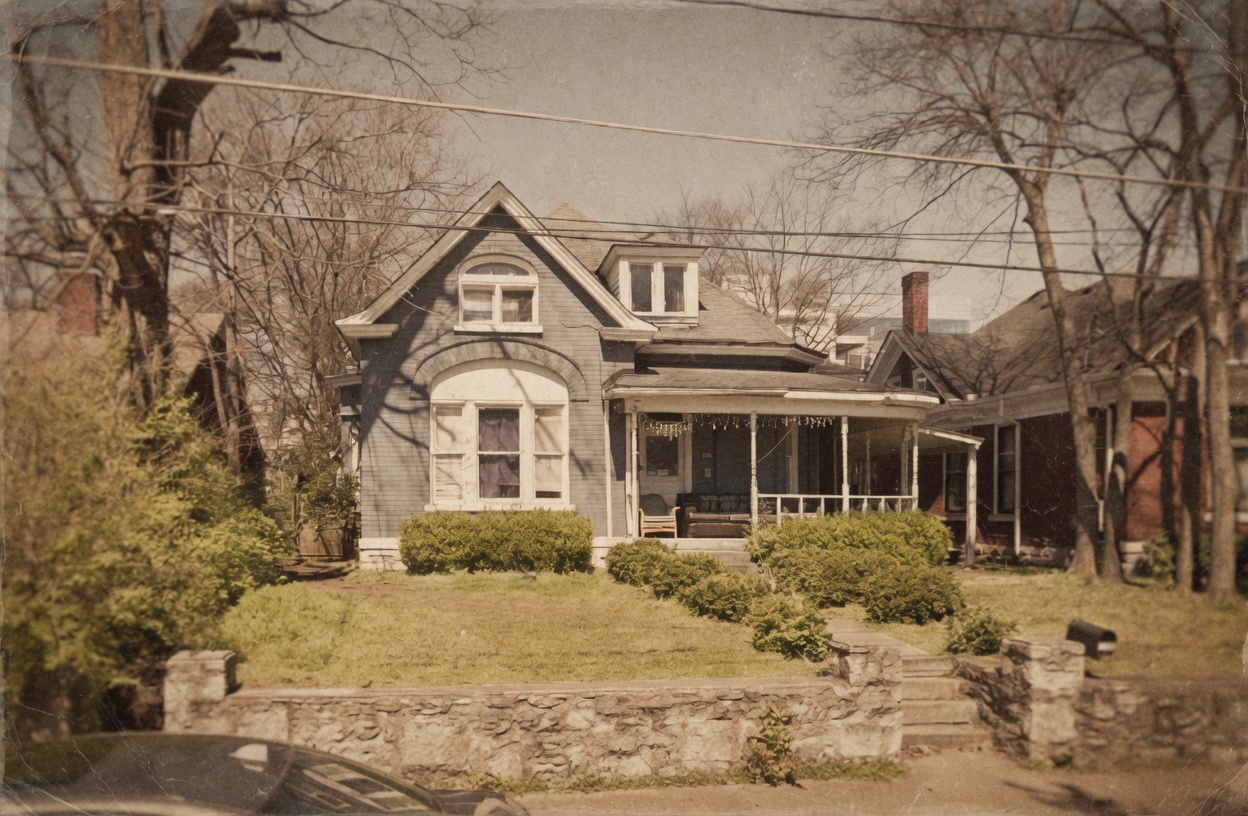
1508 South Street — Historic Building, Built 1901
The History of The Hideout: From Waylon Jennings' Music Company to Music Row's Hidden Gem
1508 South Street, Nashville, TN 37212 — Where Outlaw Legacy Still Echoes in the Basement Studio
Book Your Session in HistoryThe Origin
Waylon Jennings' Music Company
In the heart of Nashville's legendary Music Row, country icon Waylon Jennings did something few artists of his era dared — he took full control of his creative destiny. After renegotiating his landmark deal with RCA Records in the early 1970s, Jennings gained unprecedented artistic freedom: the right to choose his own songs, his own musicians, and his own production style. It was a seismic shift that helped ignite the Outlaw Country movement and forever changed the sound of Nashville.
With that hard-won independence came the need for a headquarters — a place that was entirely his own. Jennings personally established the property at 1508 South Street as the dedicated home of The Waylon Jennings Music Company. More than just an office, it became the nerve center of his publishing operation, a creative sanctuary where songs were written, deals were struck, and the outlaw spirit lived and breathed just steps from Music Row's famous studio corridor.
The building itself carried deep Nashville character — constructed in 1901, it already had decades of history before Waylon arrived. With its original bones, warm wood tones, and the kind of lived-in authenticity that no amount of money can manufacture, the property was perfect for his vision. Nestled in the 37212 zip code, just off the Row's main artery, it occupied a prime stretch of real estate that put Jennings at the epicenter of country music's creative universe while maintaining the privacy and independence he fiercely guarded.
Old-timers on the Row still talk about the energy that radiated from 1508 South Street. The upstairs gatherings were the stuff of legend — free-spirited, unapologetic, and alive with the creative electricity that defined the outlaw ethos. Musicians, songwriters, and industry renegades would drift through, drawn by the gravity of Jennings' vision and the promise that, inside these walls, the music always came first.
Did You Know?
Waylon Jennings' renegotiated RCA deal in 1972 made him one of the first Nashville artists to gain full creative control over his recordings — a move that paved the way for Willie Nelson, Kris Kristofferson, and the entire Outlaw Country movement.
The 1980s
Alan Messer's South Street Studio
Following the Waylon Jennings era, 1508 South Street continued its rich creative legacy into the 1980s as the home and photography studio of legendary Nashville music photographer Alan Messer. Known for his iconic portraits of country, rock, and outlaw artists — including Johnny Cash, Willie Nelson, and Waylon himself — Messer referred to the building affectionately as "my old house" and operated his South Street Studio here.
The space's excellent acoustics and natural character made it ideal for memorable photo sessions with artists such as Al Green, Dwight Yoakam, Nicolette Larson, and many others during this period. Messer's lens captured the raw authenticity and unguarded moments of some of music's most iconic figures — and 1508 South Street provided the perfect backdrop, with its warm wood tones, lived-in character, and the kind of creative atmosphere that put artists at ease.
This chapter further cemented 1508 South Street as a quiet but vital hub on Music Row where music history — both sonic and visual — was made. The building's walls, which had absorbed Waylon's outlaw energy, now witnessed the visual documentation of an entire era of American music, one click of the shutter at a time.
Did You Know?
Alan Messer's photography studio at 1508 South Street was more than just a workplace — it was his home. The intimate, lived-in feel of the space translated directly into the relaxed, authentic portraits that became his trademark.
Carrying the Torch
A Recording Studio Since the 1990s
After Jennings' era, the building at 1508 South Street entered a new chapter — one that honored its musical DNA while adapting to the evolving landscape of Nashville's recording industry. By the 1990s, the space had been transformed into a fully functioning professional recording studio, and it has operated as one continuously ever since.
What makes this remarkable isn't just the longevity — it's the continuity of spirit. Where other historic Music Row properties were demolished, converted into offices, or swallowed by corporate development, 1508 South Street remained a place where music was actually made. The wood-paneled walls that once absorbed Waylon's conversations and creative energy continued to absorb the sound of guitars, voices, and the hum of analog equipment pushing signal to tape.
Through the decades, the studio attracted artists who valued authenticity over polish, character over convention. The building's location — tucked just far enough off the main drag to feel like a secret — gave it an intimacy that larger, more commercial studios couldn't replicate. Musicians who worked there often described a certain something in the room: a warmth, a resonance, a feeling that the walls themselves remembered every note ever played within them.
Did You Know?
While many historic Music Row studios were demolished during Nashville's development boom of the 2000s and 2010s, 1508 South Street survived — making it one of the longest continuously operating recording spaces in the neighborhood.
2008–2018
The Brad Hill Private Studio Era
In 2008, respected country music producer and engineer Brad Hill took the reins at 1508 South Street, transforming the space into his private studio. For the next decade, Hill operated behind closed doors — no public name on the building, no website, no social media presence. Just a working studio where the work spoke for itself.
Hill's tenure represented a quieter but no less vital chapter in the building's history. As a seasoned Nashville professional, he understood the value of what the space offered: genuine acoustic character, a location steeped in musical history, and the kind of creative isolation that allowed artists to take risks and find their authentic sound without the pressure of a ticking clock in a high-overhead commercial facility.
During the Brad Hill era, the studio hosted sessions that spanned country, Americana, gospel, and rock. The basement — the same space where Waylon's outlaw energy had once filled the air — continued to serve as the heart of the operation, its low ceilings and wood surfaces creating a naturally warm, intimate recording environment that engineers and producers prized.
Did You Know?
Brad Hill kept the studio intentionally under the radar for a full decade. In an era of social media and constant self-promotion, his approach was a throwback to an older Nashville tradition — let the music do the talking.
2018–Present
The Hideout Today — Honoring the Legacy
In 2018, owner and producer Ryan Poole gave the studio a name for the first time in years: The Hideout. It was a deliberate nod to the building's outlaw heritage — because outlaws, after all, need hideouts.
Under Poole's stewardship, The Hideout has blossomed into a full-service creative space while maintaining the intimate, authentic character that has defined 1508 South Street for decades. The basement studio — Waylon's old domain — now serves as a versatile hub for professional recording sessions, photo and video production, podcast recording, and the studio's signature experience: Music Row Karaoke, where guests sing in a real recording studio and take home professionally mixed tracks as souvenirs.
The roster of artists who have worked within these walls in recent decades reads like a cross-section of Nashville's finest. Vince Gill, Maren Morris, Danny Gokey, and David Archuleta are among those who have recorded, created, or collaborated in the space — each adding their own chapter to a story that stretches back to the outlaw era.
"Every session at The Hideout carries the weight of Nashville history and the warmth of a space built for making music that matters."
Today, The Hideout stands as something rare on Music Row: a space that honors its past without being trapped by it. The wood-paneled walls still carry decades of sonic memory. The basement still hums with creative energy. And the spirit of independence that Waylon Jennings brought to 1508 South Street — the belief that the artist's vision should always come first — remains the guiding principle of everything that happens inside.
Legacy & Timeline
Five Decades of Music at 1508 South Street
Waylon Jennings' Music Company
Waylon Jennings establishes 1508 South Street as the headquarters of The Waylon Jennings Music Company — his publishing operation, music office, and creative sanctuary in this historic 1901 building.
Alan Messer's South Street Studio
Legendary Nashville music photographer Alan Messer operates his home and photography studio here, capturing iconic portraits of Johnny Cash, Willie Nelson, Al Green, Dwight Yoakam, and many more.
Professional Recording Studio
The space evolves into a continuous professional recording studio, preserving the character Waylon built while welcoming a new generation of artists to Music Row.
Brad Hill's Private Studio
Respected country producer and engineer Brad Hill uses the space as his private studio, keeping the creative flame alive during a decade of focused, behind-closed-doors work.
The Hideout Under Ryan Poole
Ryan Poole renames the space The Hideout — recording, content creation, podcast, and unforgettable Music Row Karaoke in Waylon's old basement studio.
Step Into History. Make It Yours.
Whether you're recording your next single, hosting a private karaoke night, or shooting content in a space that's seen five decades of Nashville magic — The Hideout is waiting.
The Hideout Studio · 1508 South St, Nashville, TN 37212 · On Historic Music Row